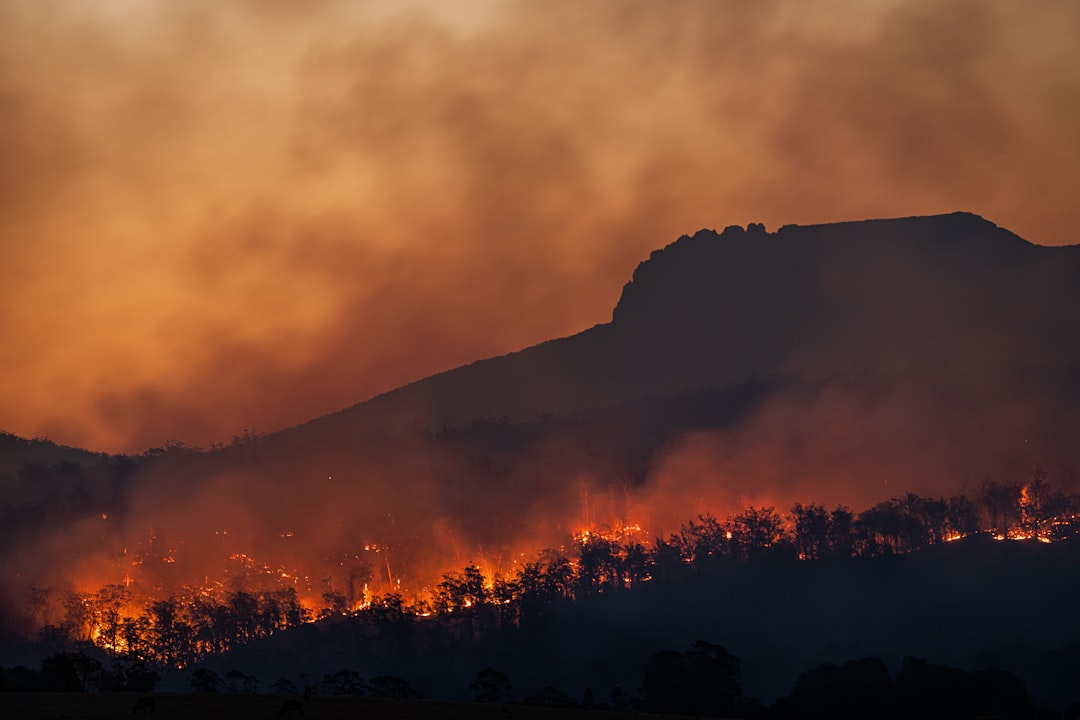

A comprehensive new scientific assessment released this week provides stark evidence that climate change is accelerating at a pace that exceeds previous predictions, with potentially severe consequences for ecosystems and human communities worldwide. The findings underscore the urgent need for ambitious climate action beyond current commitments.
Key Findings Reveal Accelerating Trends
The report, compiled by an international consortium of climate scientists from 65 countries, draws on over 14,000 peer-reviewed studies published in the last three years. It provides the most up-to-date assessment of climate change impacts, adaptation potential, and mitigation requirements.
Among the most concerning findings is that global temperatures have already risen by 1.2°C above pre-industrial levels, and current emissions trajectories could push warming beyond 1.5°C within the next decade—a threshold previously expected to be reached later in the century.
"What's particularly alarming is not just the absolute temperature increase, but the acceleration we're seeing in various climate indicators," explains Dr. Leila Karim, a lead author of the report. "Many of the changes we're observing are occurring faster than our climate models predicted even five years ago."
Oceans Warming at Unprecedented Rates
Ocean warming, a critical indicator of planetary heat accumulation, has reached record levels. The report indicates that the world's oceans absorbed 40% more heat in the past five years compared to the previous five-year period.
This accelerated ocean warming has significant implications, from more intense tropical storms to disrupted marine ecosystems. Coral reefs, already experiencing widespread bleaching events, could face annual severe bleaching in most regions by 2030—a decade earlier than previously projected.
"The ocean has been our buffer against more severe climate impacts, absorbing both heat and carbon dioxide," notes oceanographer Dr. Marco Silva. "But there are limits to this buffering capacity, and we're seeing signs that this crucial service is being compromised."
Ice Sheet Melting Exceeds Projections
The report documents that Greenland and Antarctic ice sheets are losing mass at rates that exceed worst-case scenarios from previous assessments. Greenland lost more ice in the last decade than in any previous decade since satellite measurements began in the 1970s.
This accelerated melting has significant implications for sea level rise. The report revises projections upward, suggesting that global sea levels could rise by up to 1.5 meters by 2100 under high-emission scenarios—approximately 30% higher than previous estimates.
Such sea level rise would threaten coastal communities worldwide, with the report identifying over 410 million people who would be exposed to coastal flooding risks by mid-century.
Extreme Weather Events Increasing in Frequency and Intensity
The connection between climate change and extreme weather events has strengthened, according to the report. It concludes with high confidence that human-induced climate change is making heatwaves, heavy precipitation, and droughts more frequent and intense in most regions.
Particularly concerning is the emergence of compound extreme events—multiple climate hazards occurring simultaneously or in rapid succession. These compound events can overwhelm adaptation capacities and recovery efforts.
"We used to analyze climate hazards individually, but we're increasingly seeing these hazards interact," says Dr. Jana Rivera, an expert on climate extremes. "A region might experience drought followed immediately by extreme rainfall, leading to flash floods on dry, hardened soil, magnifying the impact of both events."
Ecosystem Transformations Accelerating
The report documents widespread ecological changes occurring at unprecedented rates. Climate-driven shifts in species distributions, phenology (timing of seasonal activities), and interactions are reshaping ecosystems globally.
Approximately 14% of terrestrial species assessed face a high risk of extinction even at 1.5°C of warming, with this percentage rising to over 29% if warming reaches 3°C—a level that current policies would lead toward.
Particularly vulnerable are Arctic, high-mountain, and tropical coral reef ecosystems. The report notes that some ecosystems may be approaching irreversible tipping points, where relatively small additional warming could trigger large-scale transformations.
Carbon Budget Rapidly Depleting
The report indicates that the remaining carbon budget—the amount of CO₂ that can be emitted while still limiting warming to specific temperature thresholds—is being depleted faster than previously estimated.
To have a 50% chance of limiting warming to 1.5°C, the world can emit only about 380 gigatons of additional CO₂. At current emission rates of approximately 40 gigatons per year, this budget would be exhausted within a decade.
"These findings make it clear that incremental reductions in emissions will not be sufficient," emphasizes climate policy expert Dr. Wei Zhang. "We need transformative changes across energy, transportation, food, and industrial systems to remain within safe climate boundaries."
Adaptation Limits Becoming Apparent
While the report emphasizes the importance of adaptation measures, it also highlights growing evidence of adaptation limits—points beyond which adjustments become ineffective or prohibitively costly.
For example, some coastal communities are already facing relocation due to sea level rise and erosion, while agricultural adaptations may be insufficient in regions experiencing combined heat and water stress.
The report estimates that between 3.3 and 3.6 billion people live in contexts that are highly vulnerable to climate change, with adaptation gaps particularly pronounced in developing regions.
Equity and Justice Dimensions
A key theme throughout the report is the unequal distribution of climate impacts and responsibilities. Countries that have contributed least to historical emissions often face the most severe climate risks and have fewer resources for adaptation and resilience-building.
The report emphasizes that addressing these inequities is not only an ethical imperative but also essential for effective global climate action. Climate policies that ignore equity dimensions risk exacerbating existing vulnerabilities and fostering resistance to necessary transitions.
Economic Costs Mounting
The economic dimensions of climate change are receiving increased attention in the report. It estimates that unmitigated climate change could reduce global economic output by 10-23% by 2100, with disproportionate impacts on lower-income countries.
Conversely, the costs of rapid decarbonization are assessed as significantly lower than previously estimated, particularly when considering co-benefits such as improved public health from reduced air pollution.
"The economic case for ambitious climate action has never been stronger," notes ecological economist Dr. Hannah Morse. "The financial risks of inaction far outweigh the investments needed for a clean energy transition."
A Narrowing Window for Action
Perhaps the most sobering conclusion of the report is that the window for limiting the most dangerous climate impacts is narrowing rapidly. Current national climate commitments, if fully implemented, would still lead to warming of approximately 2.7°C by 2100—well above the Paris Agreement goals of limiting warming to "well below 2°C" and pursuing efforts to limit it to 1.5°C.
However, the report also emphasizes that it's not too late to avoid the worst outcomes. Deep, rapid emissions reductions this decade could still keep the 1.5°C goal within reach, though this would require unprecedented transformations across all sectors.
"This report should be understood as both a warning and a roadmap," concludes Dr. Karim. "The climate system is responding faster than we anticipated, but our capacity for innovation and transformation is also greater than many realize. The decisive factor will be whether we can summon the political will to act at the speed and scale the science demands."
As governments prepare for the next round of climate negotiations later this year, the findings present a clear mandate for strengthened ambition and accelerated implementation of climate solutions.